
The Furthest Place on Earth Came to Casablanca
Par Eric Nielson
When I was a kid in Corvallis, Oregon, I went through a phase of looking things up just to see what the answer would be. One day the question was a simple one: what is the furthest place on Earth from where I am right now?
The answer was Réunion.
I had never heard of it. A small French island in the Indian Ocean, east of Madagascar, about as far from the Willamette Valley as you can get without leaving the planet. I remember staring at it on a map and feeling something close to wonder. Somewhere on the other side of the world, people were living perfectly ordinary lives in a place I would probably never see.
I still haven't been. But yesterday, Réunion came to me.
An Afternoon at Aïn Chock
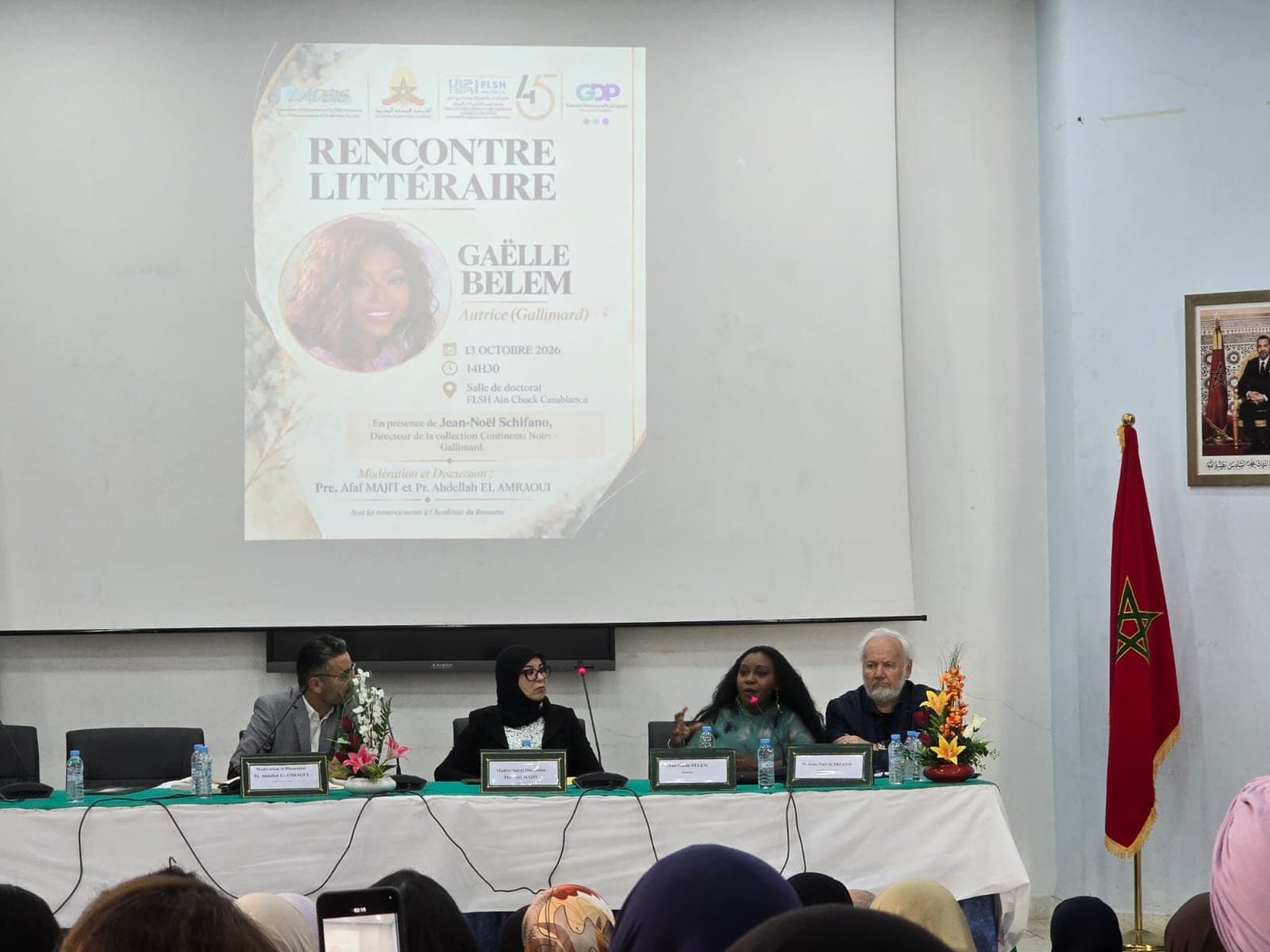
On Tuesday afternoon, the Faculty of Letters and Human Sciences at Aïn Chock hosted a rencontre littéraire with Gaëlle Bélem, a novelist from Réunion published by Gallimard. Jean-Noël Schifano, who directs Gallimard's Continents Noirs collection, sat beside her, and the discussion was moderated by Professor Afaf Majit and Professor Abdellah El Amraoui. The room was packed.
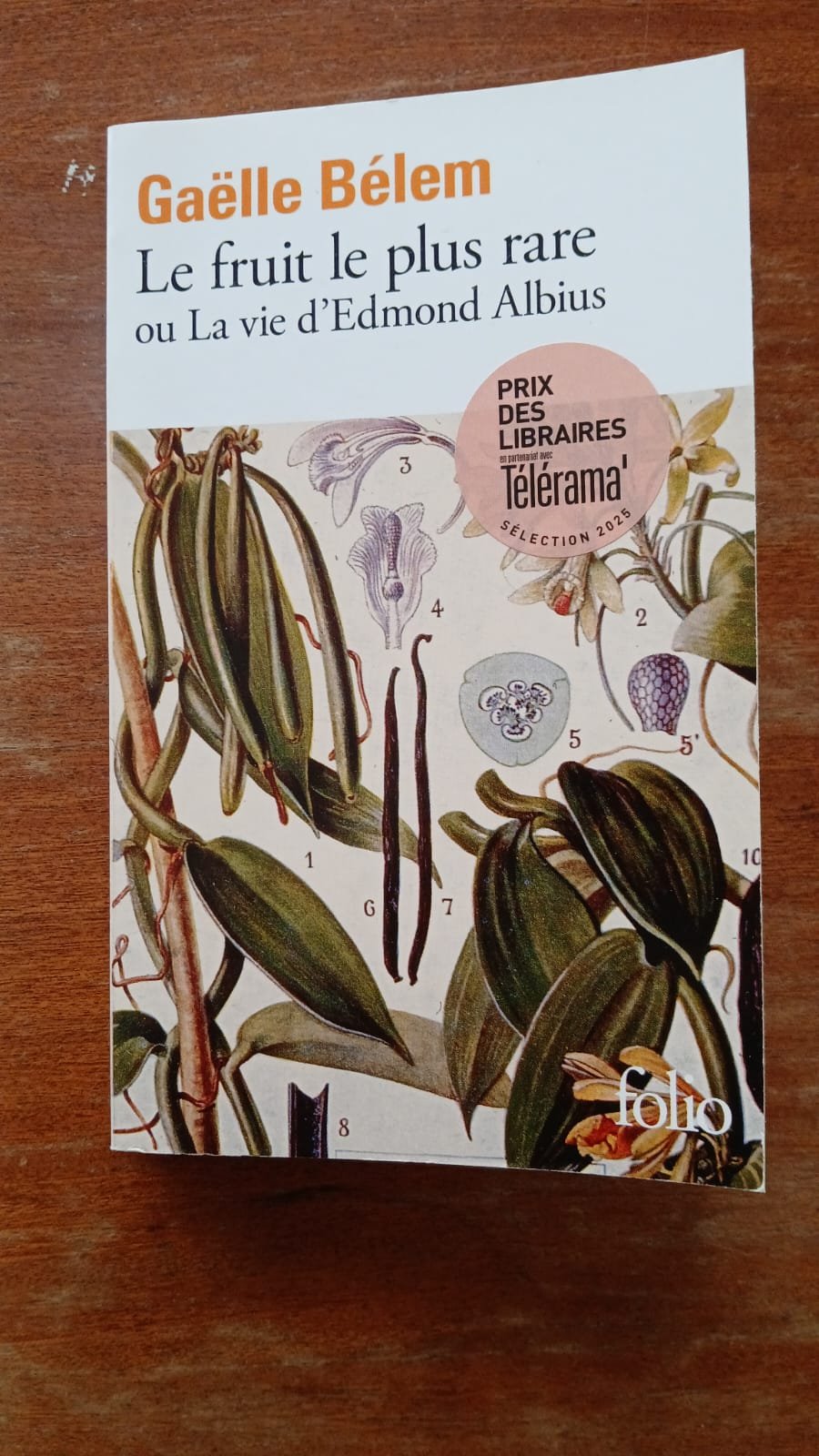
Bélem's novel, Le fruit le plus rare, ou la vie d'Edmond Albius, tells the story of a boy most people have never heard of, even though nearly all of us have tasted his work. In 1841, Edmond Albius was twelve years old and enslaved on Réunion. Vanilla vines grew on the island, but they almost never produced pods, because the insect that pollinates them in Mexico didn't live there. Albius worked out how to pollinate each flower by hand, quickly, with a thin sliver of plant and a press of the thumb.
That method is still how vanilla is grown today. Almost every vanilla bean you have ever eaten passed through a human hand because of what a twelve-year-old figured out on Réunion.
He died poor, in 1880.
Opposite Ends of the Map
Gaëlle Bélem and I were born less than a year apart. She grew up on the island I once picked out as the furthest point from my childhood bedroom. I'm a white man from Oregon. She is a black woman from Réunion. We started on opposite sides of the planet, both of us ended up writing books, and both of us ended up in the same room in Casablanca on the same Tuesday afternoon.
Neither of us is from here. Geography didn't bring us together. Language did. The book is in French, the poster was in French, and French was the common ground in that room. A novelist from the Indian Ocean, a French editor, Moroccan professors and an American in the audience could all follow the same conversation because they shared one.
Where the Credit Goes
The detail that stays with me most isn't the coincidence of our birthdays. It's what happened to Edmond Albius's name.
His method crossed oceans. It built fortunes on Réunion and later in Madagascar, which is still the world's largest vanilla producer. The knowledge went everywhere. His name, for most of the last 180 years, stayed behind. It took a novelist from his own island to carry it back out into the world.
I see a small version of that pattern all the time in my work. Moroccan companies and professionals do excellent work, and that work often travels further than they realize: into reports, partnerships and international markets. But when the English that describes it is weak, the credit gets lost along the way. A foreign partner remembers the result and forgets who produced it, or gives the credit to whoever explained it best.
Good work doesn't automatically arrive with your name attached. Clear communication is what keeps it there.
One More Ocean
Bélem's novel has since been translated into English as The Rarest Fruit, so Albius's story has crossed one more stretch of water. A book written in French, on an island in the Indian Ocean, now reaches English readers because someone did the slow, careful work of carrying it into another language without losing what made it worth reading.
That's the part of this story that feels closest to what I do every day. When your work reaches an English-speaking audience, it should arrive intact, in your voice, with your name still on it.
I came home with a copy of the book and an odd sense that a childhood question had finally been answered. The furthest place on Earth turned out to be a few meters away, on the other side of a microphone, reachable through a shared language. For a business built on helping people be understood, that seems like a good lesson to keep.
Eric Nielson is the founder of Nielson English and an editor and translator at TelQuel English.