The "High Shop" Problem: Why English on a Sign Isn't the Same as English That Works
By Eric Nielson
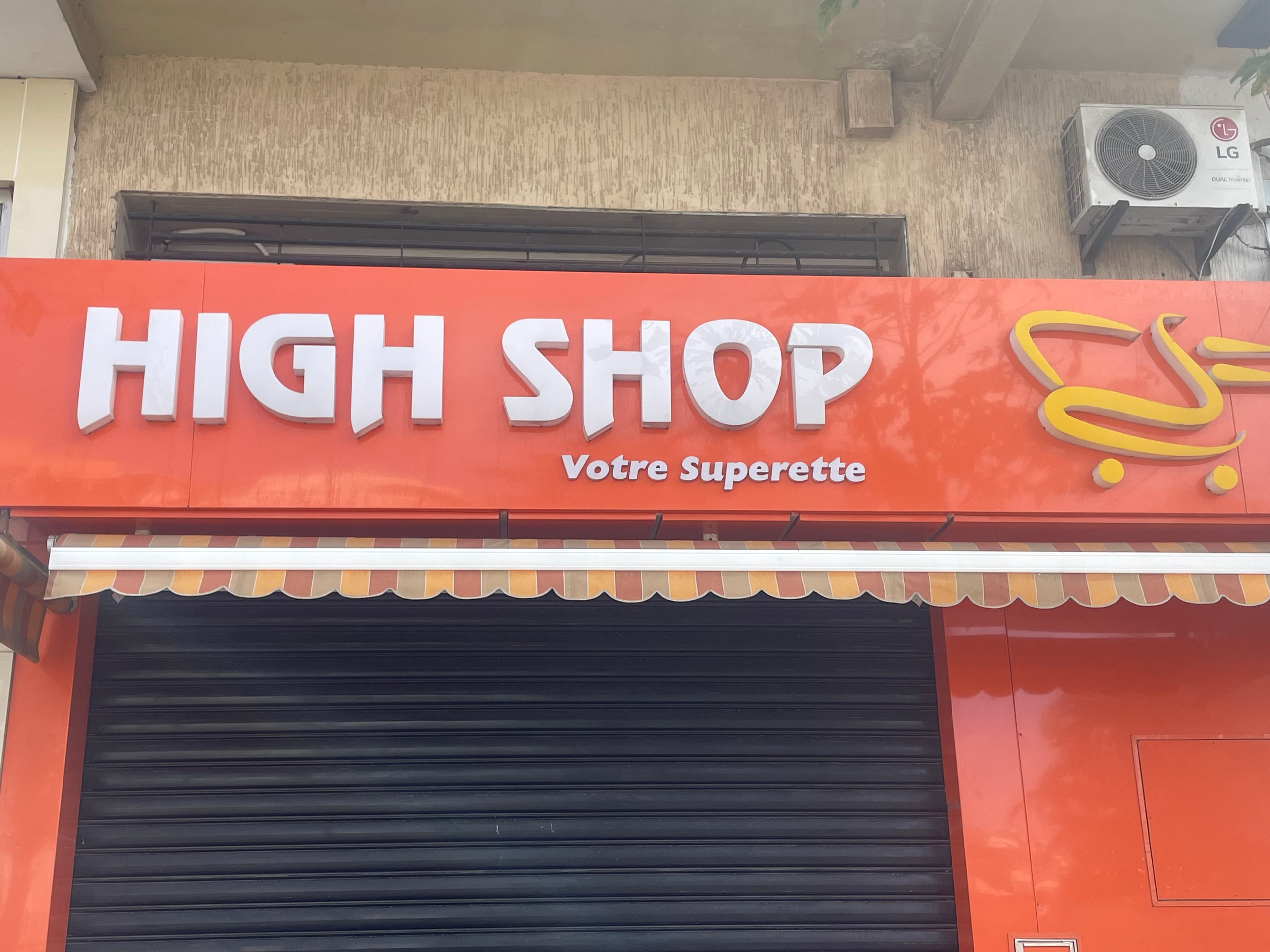
There's a walk I've been looking forward to reclaiming for a long time.
It runs along the ocean near the Hassan II Mosque, one of those rare stretches of Casablanca where the Atlantic breeze hits you just right and the city feels, briefly, like it's exhaling. After six months of health problems that left me largely housebound, I finally found myself out there again last week with my wife, moving at a pace that felt almost normal.
We weren't on the main tourist thoroughfare for long. If you know Casablanca, you know that the polished seafront gives way quickly to something more honest: the quartiers populaires, the real neighborhoods, where the city actually lives. Corner shops, kids on bikes, the smell of msemen drifting out of somewhere nearby.
That's where I saw it.
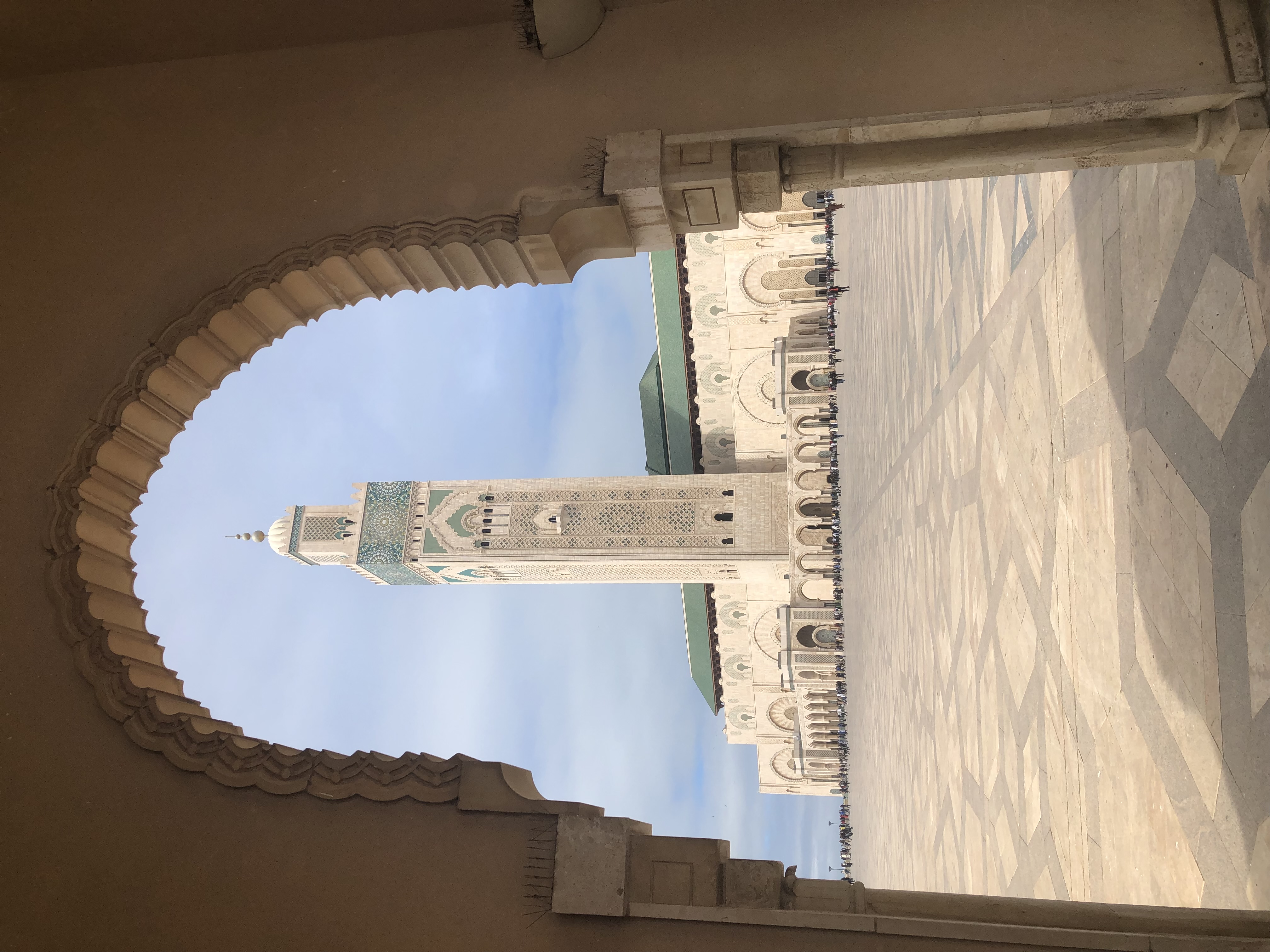
A small convenience shop, proudly displaying its name in large letters above the door: High Shop.
I laughed. My wife, Moroccan, bilingual, no stranger to English, looked at me and asked why.
I tried to explain. She considered it for a moment, then gave me the look that means only you would find this funny.
But that's exactly the point. She speaks English. She just doesn't carry the native speaker's instinctive awareness of every connotation a word drags behind it. That's not a flaw. It's simply how language works. And it's precisely why the owner of High Shop had no idea, and likely still doesn't.
The Aspiration Is Real. The Gap Is Also Real.
The owner of High Shop almost certainly chose that name to signal something: quality, modernity, ambition. High as in high-end. High as in elevated. It's a smart instinct. English carries enormous cultural capital in Morocco right now. It signals global outlook, professionalism, and a certain forward-looking energy that French no longer monopolizes in the way it once did.
The problem is that English, like any language, comes loaded with connotations that don't always survive the translation of intent. "High Shop" to a native English speaker does not evoke premium goods or elevated service. It evokes something else entirely, something that probably isn't what a neighborhood convenience shop in Casablanca was going for.
The gap between what was meant and what was communicated is small. The laughs it generates are not.
From Shop Signs to Boardrooms
Now, a sign above a corner shop is charming. It costs nothing but a chuckle, and I mean that affectionately. There's something genuinely endearing about a city so enthusiastic about English that it reaches for it everywhere, even when the reach slightly exceeds the grasp.
But the same dynamic plays out in contexts where the stakes are considerably higher.
I've seen it in investor decks, where a single mistranslated term reframes a company's entire value proposition in ways the authors never intended. In press releases, where a phrasing choice that sounds perfectly natural in French becomes awkward or even comical in English, and gets quietly ignored by the international outlets the company was hoping to reach. In corporate websites where the English version reads like it was passed through a translation tool and then left alone, with every seam visible to anyone who reads the language natively.
In those contexts, the gap between what was meant and what was communicated isn't charming. It's expensive.
The City That Wants to Be Global
Here's the thing I want to be clear about: this is not a criticism of Casablanca, or of Moroccan businesses, or of anyone's English. It's an observation about ambition, and Morocco has it in abundance.
The country is positioning itself as a genuine hub: for investment, for logistics, for renewable energy, for finance. Casablanca is not a city that thinks small. The businesses here are reaching for international partners, global clients, and foreign investment with real seriousness.
That ambition deserves communication that matches it. Not English that was translated, but English that was written by someone who understands not just the words, but the register, the connotations, the way a native reader will move through a sentence and what they'll take away from it.
The difference between those two things is the difference between a shop called "High Shop" and a shop called something that makes exactly the impression it intended.
What Nielson English Does
I'm a native English speaker based in Casablanca. I work with Moroccan businesses, publications, and organizations who take their English seriously: translating, editing, and crafting communications that land the way they're supposed to.
Not English that's technically correct. English that works.
If your business is reaching for the international stage, and if you're reading this it probably is, that distinction matters more than you might think.
Eric Nielson is the founder of Nielson English and an editor and translator at TelQuel English, Morocco's leading independent French-language weekly.